 832-509-5099


FoLix Hair Laser
Laser stimulates the follicle and increases blood flow around it.
Hair restoration at Shine Plastic Surgery is a comprehensive program that is customized to patients’ needs and goals. Our focus is on early and aggressive treatment of thinning in efforts to prevent the need for hair transplantation in the future.
Sessions are generally short, and you can go straight back to your day. Every plan is designed and overseen by Dr. Janak Parikh, a double board-certified plastic surgeon.

Laser stimulates the follicle and increases blood flow around it.
Regenerative injections supply growth factors to the thinning areas.
Medication quiets the hormonal signal behind pattern loss.
The Program
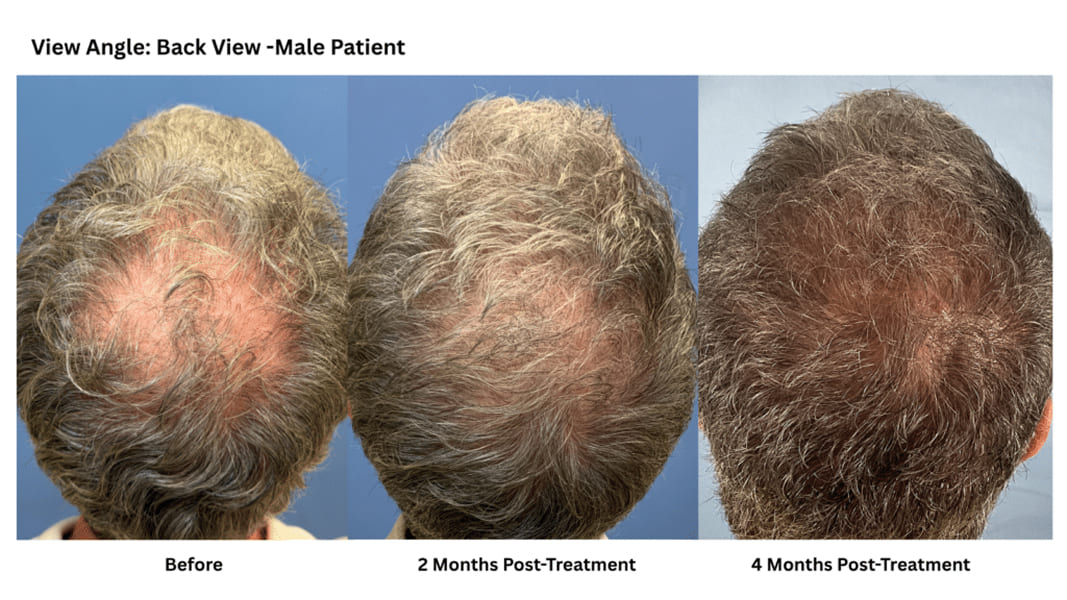
The hair restoration program at Shine Plastic Surgery is a physician-led treatment plan, not a single appointment or a product you buy at the counter. It combines three treatments, each aimed at a different cause of thinning. Laser stimulates the follicle, regenerative injections supply growth factors, and medication quiets the hormonal signal behind pattern loss. Many patients use all three.
That matters because the shampoos, supplements, and laser caps sold online tend to address one piece of the problem at best, and none of them starts with a diagnosis. Pattern hair loss, postpartum shedding, thyroid-related thinning, and hair loss after rapid weight loss all look similar in the mirror but call for different plans. At Shine Plastic Surgery, the plan begins with Dr. Parikh examining your scalp and, when needed, ordering bloodwork, so the treatments you invest in are the right ones.
Everything in the program is performed in our Houston office. There are no incisions, no general anesthesia, and no recovery time. Patients fit sessions around work and head straight back to their day.
Is It Right for You?
The best candidates for hair restoration are adults whose hair is thinning but not gone. If you can still see fine, short hairs in the area that concerns you, the follicles there are alive and can be stimulated. Patients come to Shine Plastic Surgery for hair restoration in a few common situations:
A man in his 20s to 50s who has noticed his hairline moving back or his crown thinning and wants to act before it progresses
A woman whose part has widened, whose ponytail feels thinner, or who began shedding after pregnancy, perimenopause, or starting hormone therapy
Anyone shedding heavily after significant weight loss, including on medications like Ozempic, Wegovy, Mounjaro, or Zepbound
A patient who has tried minoxidil or finasteride alone and wants to add in-office treatments for a stronger response
Someone who wants to improve density without committing to transplant surgery
Hair restoration is not the right first step for everyone. Completely bald, smooth areas have no follicles left to stimulate, and an active scalp infection, uncontrolled autoimmune hair loss, or a bleeding disorder may rule out certain treatments. Dr. Parikh reviews your health history and medications at the consultation and will tell you plainly if a different approach, including a surgical hair transplant, would serve you better.
The Protocol
Hair restoration at Shine Plastic Surgery starts with an assessment and ends with maintenance; the treatments in between depend on your pattern of loss. Some patients need only one of the therapies below, and others do best with FoLix and PRP together; not every patient uses every one. Dr. Parikh chooses the combination, the number of sessions, and the medications at your consultation.
Dr. Parikh examines the scalp and identifies the pattern and stage of loss. If your history suggests a contributing factor such as a nutritional deficiency or a hormone regimen, he orders bloodwork before treatment begins. Correcting those first keeps the rest of the program from working against a headwind.
The FoLix hair laser is the first FDA-cleared fractional laser made specifically for hair loss. In a short in-office session, the handpiece delivers tiny columns of laser energy into the scalp, which prompts the tissue to repair itself and increases blood flow around the follicles. The standard series is four to six sessions, one per month. The device cools the skin as it works, so most patients feel warmth and a light prickling rather than pain.
PRP with exosomes is used on its own or alongside FoLix, depending on your plan. We draw a small amount of your blood, concentrate the platelets and inject the mixture into the thinning areas with a fine needle, adding exosomes on top to supercharge your results. Platelets carry growth factors; exosomes carry the signals that tell cells to use them. Sessions are usually spaced several weeks apart and, when both therapies are in your plan, can be scheduled on the same day as a FoLix visit.
In-office treatments wake the follicle up. Medication keeps it awake. Depending on your sex and medical history, Dr. Parikh may prescribe oral or topical minoxidil, finasteride for appropriate men, or spironolactone for appropriate women. He also reviews nutrition and supplements where a deficiency showed up in your lab work.
Once the initial series is complete, most patients return every few months for a maintenance FoLix or PRP session. Pattern hair loss does not stop on its own, so maintenance is what turns a good six-month result into a lasting one.
Your Visits
Your first visit is a free consultation with Dr. Parikh, and you will leave with a written plan rather than a sales pitch. He will walk you through which steps apply to you, how many sessions to expect, what medications he recommends, and the total cost, with financing options if you want them.
Treatment visits are built for a working schedule. Our office at 1900 North Loop West is open Monday through Friday, and a FoLix or PRP session is short enough to fit around a workday. You arrive with clean, dry hair and no styling product. Most patients do not need anesthesia for FoLix, and local anesthetic is available for those who want it. Afterward you can drive yourself and go back to work, the gym, or the school pickup line.
Your Results
There is nothing to recover from after a hair restoration session, but there is a timeline to understand, because hair grows on its own schedule.
First Few Days
Expect a pink, warm scalp for a few hours after FoLix and some tenderness at the injection sites for a day or two after PRP. Wait until the next morning to wash your hair, skip the sauna and hot yoga for a couple of days, and wear a hat in strong sun.
Weeks 2–8
Shedding often slows during this window, and some patients notice that fewer hairs collect in the shower drain or on the pillow. New growth is happening below the surface but is not yet visible. You continue monthly FoLix sessions and any medication Dr. Parikh prescribed.
Months 3–6
This is when the mirror catches up. Fine new hairs appear along the part or hairline, existing hair feels thicker, and styling gets easier. Dr. Parikh checks your progress against where you started at each visit, because gradual change is hard to judge from memory. Results keep improving for several months after the last session in the series.
Ongoing
With maintenance sessions and continued medication, the density you gain can be held for years. Stop everything, and pattern hair loss resumes its original course over time. We are candid about that at the consultation so you can decide whether the commitment fits your life.
If you want to know what a realistic timeline looks like for your hair, book a free consultation with Dr. Parikh at Shine Plastic Surgery.
Safety
Yes, for appropriately screened patients, and the screening is the point. FoLix is FDA-cleared for adult men and women with pattern hair loss, and its side effects are limited to temporary redness, warmth, and occasional light flaking. PRP is made from your own blood, and the exosomes are a lab-prepared biologic; soreness and minor bruising at the injection sites are the common effects of either. Prescription medications carry their own considerations, which Dr. Parikh discusses before writing a prescription.
The risks worth avoiding come from treating the wrong patient or the wrong diagnosis. A scalp infection, an undiagnosed autoimmune condition, or a clotting disorder can turn a routine session into a problem, which is why a physician, not a technician, evaluates you before anything is scheduled.
Combine Treatments
Many hair restoration patients combine their visits with the medspa treatments they already schedule at Shine Plastic Surgery. A FoLix session can be booked on the same day as Botox or dermal fillers, and patients who are treating sun damage or texture on the face often add skin rejuvenation to the same visit. Our coordinators can build a single appointment that covers everything on your list.

Why Choose Dr. Parikh
Double Board-Certified Plastic Surgeon
Most medspas hand hair restoration to an aesthetician working from a protocol sheet. At Shine Plastic Surgery, a double board-certified plastic surgeon examines your scalp, orders the labs, chooses the medications, and sets the plan. The treatments are non-surgical, but the judgment behind them is not.
Cost & Financing
Hair restoration at Shine Plastic Surgery is priced by program rather than by visit, so you know the full cost before you start. The main variables are how many FoLix sessions you need, whether PRP with exosomes is part of your plan, and which medications are prescribed. A plan built around one therapy costs less than the complete protocol, and Dr. Parikh will tell you at the consultation whether the added steps are worth it for your pattern of loss.
Your consultation is free, and your written quote comes with financing options, including 0% APR financing through CareCredit or Cherry for qualified applicants. Check our current specials as well, since hair restoration packages are offered from time to time.
The clearest way to understand what hair restoration can do is to see a scalp like yours at the start of a program and six months in. Photos are the most honest measure of a treatment that works over months rather than days. Browse the Shine Plastic Surgery gallery, and at your consultation ask to see cases that match your hair type and stage of loss.
The earlier thinning is treated, the more hair there is to save. If your hairline, part, or crown has changed, or you are shedding more than usual after weight loss or a hormonal shift, schedule a free consultation with Dr. Parikh at Shine Plastic Surgery. He will examine your scalp, tell you what is causing the loss, and lay out a plan that fits your schedule and budget. Shine Plastic Surgery is located at 1900 North Loop West, Suite 150, in Houston.
Not much. FoLix feels like warmth with a light prickling, and the handpiece cools the scalp as it works, so numbing is rarely needed. PRP injections use a very fine needle and feel like quick pinches, and local anesthetic is available if you want it. Most patients rate both as easily tolerable.
Less shedding is often the first change, within the first several weeks. Visible new growth and thicker existing hair usually show up around month three and keep improving through month six and beyond. Hair grows slowly, so judge progress over months rather than weeks.
A typical first series is four to six monthly FoLix sessions, with PRP and exosomes added between some of them, followed by maintenance every few months. The exact number depends on how far your thinning has progressed and whether medication is part of your plan. Dr. Parikh sets the schedule at your free consultation.
It depends on how many steps of the protocol you need. A FoLix series alone costs less than FoLix plus PRP plus medication, and maintenance is priced separately. You receive a written quote at your free consultation, and 0% APR financing through CareCredit or Cherry is available to qualified applicants.
No. You can drive home, return to work, and exercise the same day. The only requests are to wait until the next morning to wash your hair, avoid saunas and hot yoga for a couple of days, and protect the scalp from strong sun.
Laser caps use low-level light therapy, which does not create the controlled micro-injury that triggers tissue repair. FoLix is a fractional laser that delivers energy into the dermis in precise columns, and it is the first fractional laser the FDA has cleared specifically for hair loss. It is a physician-delivered treatment, not a wearable.
Over time, yes, if the underlying cause is pattern hair loss, because the genetic signal does not go away. Maintenance sessions and continued medication hold the result. Hair lost to a temporary cause such as pregnancy, illness, or rapid weight loss often stays recovered once the trigger has passed.
Yes. Hair restoration treats the scalp and injectables treat the face, so they do not interfere with each other. Many Shine Plastic Surgery patients schedule them together to save a trip. Let our coordinator know when you book so the appointment is long enough.